In the heart of 1000 Islands, Ontario, Canada, a serene winter scene unfolds as the forest’s edge reveals trees gracefully adorned with freshly fallen snow. The landscape, captured by Duncan Rawlinson, evokes a sense of tranquility and timelessness, as the snow-dappled branches and pristine white ground create a picturesque tableau of nature’s delicate beauty. The hushed atmosphere and frozen landscape convey a sense of peaceful solitude, with the snow-blanketed trees standing tall against the crisp winter air. This ethereal scene showcases the magic of nature and the idyllic quietude that can be found within a snow-covered woodland during the winter season. https://Duncan.co/the-quiet-of-snow
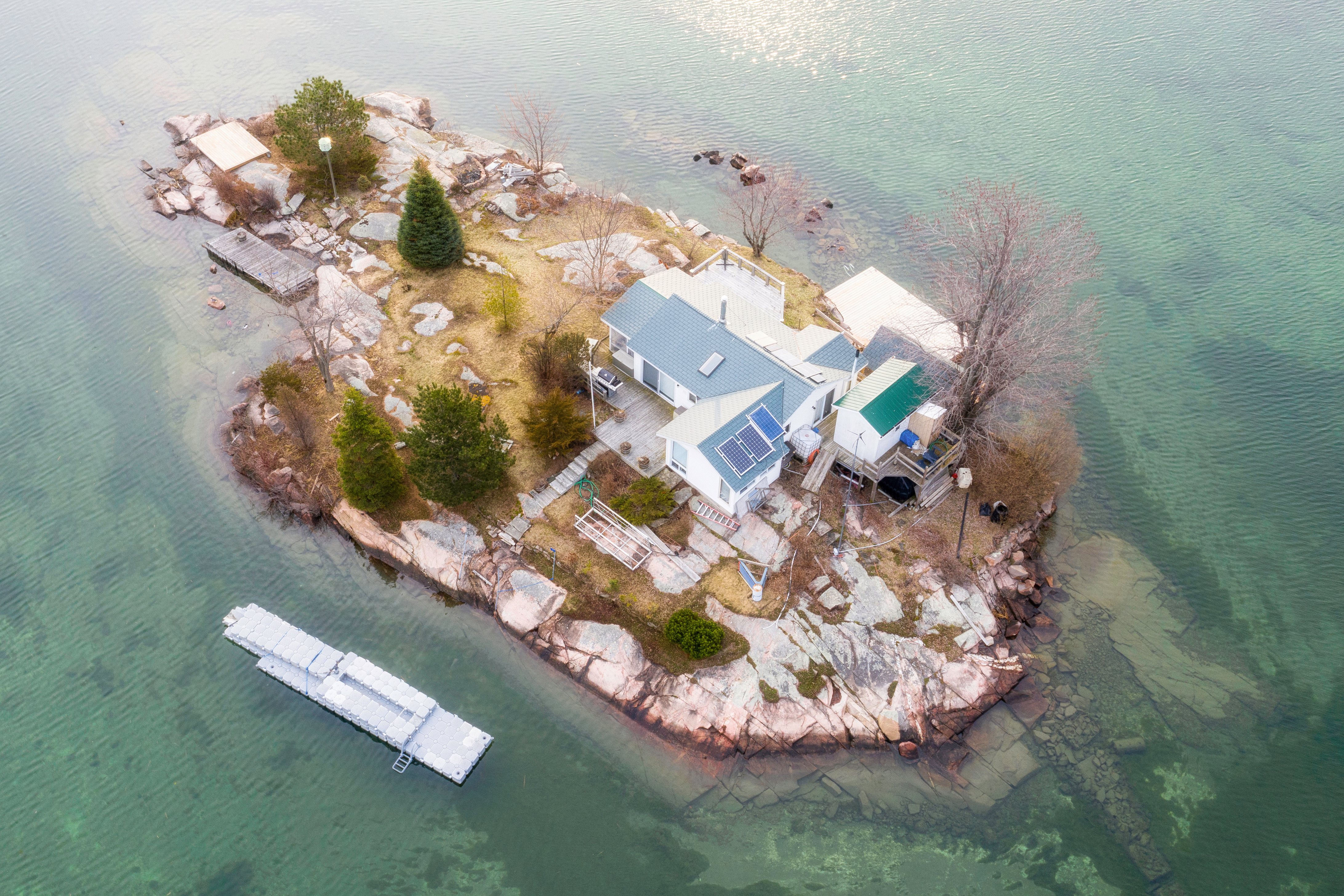
An aerial perspective captures the serene beauty of a small island, home to a quaint cottage, located within the picturesque 1000 Islands region along the Saint Lawrence River in Ontario, Canada. The scene, devoid of visitors, suggests that it is the off-season. The island’s clear waters exhibit an enchanting blend of light blue and green hues, inviting the viewer to imagine a peaceful retreat.
The compact island houses a charming cottage, equipped with solar panels on its roof, demonstrating an eco-conscious choice in this idyllic setting. A few sparse trees punctuate the landscape, while the dock, tucked away, indicates a pause in water-based activities. The tranquility of the island and its surroundings evoke a sense of solace and calm, offering an ideal destination for a restful escape from the bustle of everyday life.
Photographer Duncan Rawlinson captured this moment during a spring morning, using a unique aerial viewpoint. The stillness of Chichester Island, seemingly suspended in time, beckons those in search of a serene and intimate getaway. https://Duncan.co/island-tranquility
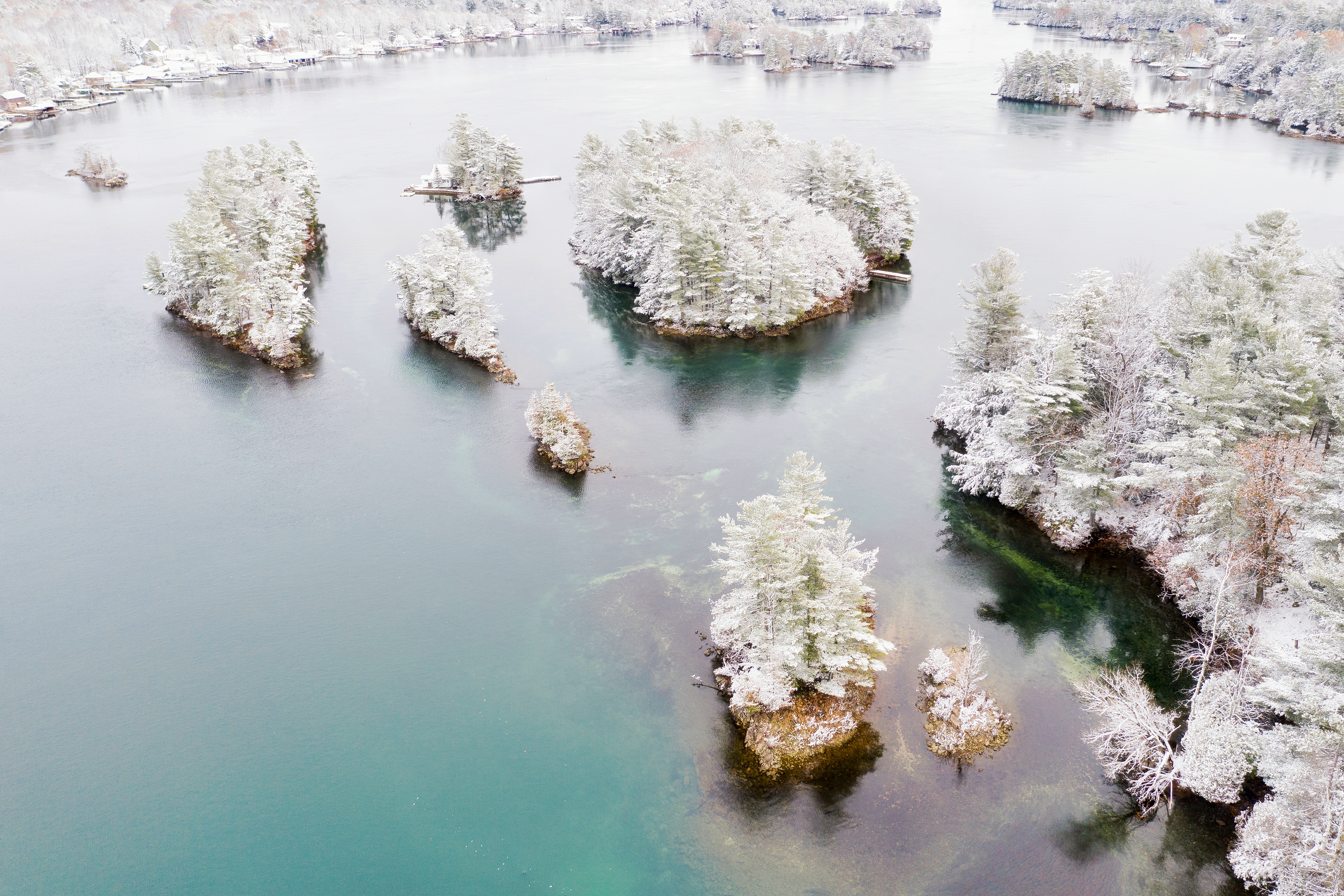
Gazing down upon the Thousand Islands in Ontario, Canada, this aerial perspective reveals a wintery wonderland of snow-dusted islands scattered amidst serene, teal-hued waters. The river, not yet entirely frozen, weaves its way around the islands, lending the landscape a sense of tranquility. Numerous islands pepper the scene, each a unique natural gem with its own tale to tell.
Though the chill of winter has blanketed the landscape with a layer of pristine snow, life persists along the shoreline. Cottages dot the banks, their inhabitants likely basking in the cozy warmth within, while marveling at the untouched beauty outside their windows. This scene encapsulates the essence of Canadian wilderness and outdoor adventure, with the promise of exploration and leisure awaiting those who venture out onto the snow-laden islands.
Photographer Duncan Rawlinson’s skillful aerial capture offers a bird’s eye view of the striking contrast between the white snow and the vivid blue-green waters. The islands, bathed in the gentle light of a winter’s day, form a picturesque archipelago that exudes both serenity and majesty. This beautiful image serves as a reminder of nature’s timeless splendor and its ability to enchant us, even in its most frigid moments. https://Duncan.co/snowy-archipelago
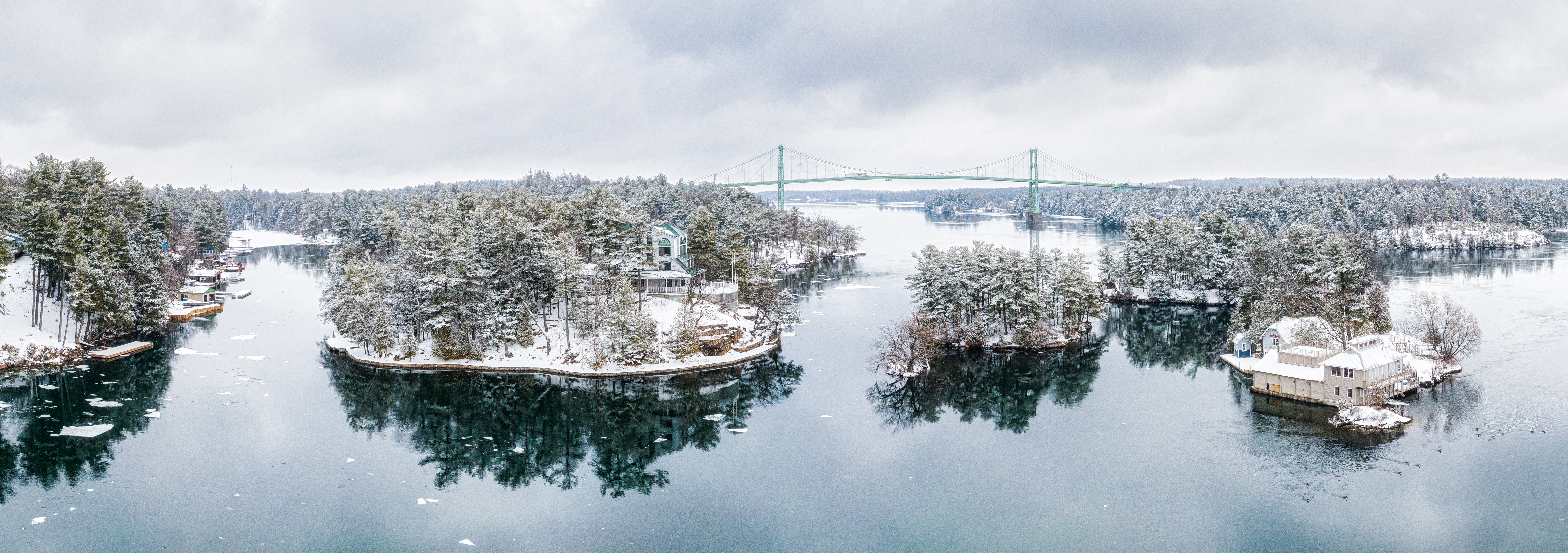
This aerial photograph showcases the serene beauty of the Thousand Islands region near Ivy Lea Campground in Ontario, Canada. The panorama captures a glimpse into Smuggler’s Cove, where snow-covered islands create a pristine winter scene. The Thousand Islands Bridge gracefully stretches across the frame, connecting the landscape with an architectural elegance.
As the snowy tranquility envelops the islands, a sense of peace and solitude is evoked, providing a gentle contrast to the icy waters below. The frosted trees and ice formations scattered throughout the landscape add to the crisp, wintry atmosphere. Wildlife can be found seeking refuge in this frozen paradise, while the calm waters reflect the surrounding scenery like a mirror.
This breathtaking view of the 1000 Islands, as photographed by Duncan Rawlinson, highlights the natural beauty and seasonal charm of the area. The photograph invites the viewer to appreciate the quiet serenity of life on the river amidst a wintry scene that embodies the essence of Ontario’s winter solace. https://Duncan.co/snowy-tranquility-in-the-1000-islands
Duncan Rawlinson’s series, “Visions of Canada Burning,” presents a captivating visual testament of nature’s ferocity through the lens of Canadian wildfires. Leveraging advanced AI tools, Rawlinson transforms his vision into vivid images that lay bare the raw power and tragic beauty of the wildfires. His technique brings forth a uniquely ethereal quality, casting a fresh perspective on the profound impact of these natural disasters. This innovative approach not only enhances the dramatic intensity of the subject but also bridges the gap between traditional photography and the evolving world of digital artistry. It’s a compelling homage to nature’s wild unpredictability and a stark reminder of its consequences. https://Duncan.co/visions-of-canada-burning
In this image, Duncan Rawlinson brilliantly blurs the lines between photography and modern AI-powered image generation tools to produce a visually captivating portrayal of OpenAI’s ChatGPT.
Rawlinson starts with his signature photographic method, leveraging his prowess in capturing the nuances of his subjects. His choice of the Phase One XF IQ4 150MP Camera ensures an unmatched level of detail, a testament to his commitment to quality.
From this photographic foundation, Rawlinson skillfully transitions to the digital art realm. The AI’s “head” and its complex neural network are not captured through the lens, but through the precise and calculated application of AI image generation tools. These tools allow him to visualize an abstract concept like a neural network, converting it into tangible lines and nodes, interweaving through the AI’s head.
The creation process is thus a symbiotic dance between high-resolution photography and AI-driven digital art. Rawlinson marries the tactile realism of photography with the boundless possibilities of AI-powered graphic design. The result is a unique hybrid image, demonstrating how AI can be used as an artistic tool to bring abstract concepts to life.
By creating the image in his signature style, Rawlinson adds a layer of artistic interpretation to the AI’s representation. He invites the viewer to appreciate not only the AI’s intricate complexity but also the novel way in which traditional photography can be elevated by modern AI tools. This image stands as a testament to the intersection of art, technology, and human creativity.

In this aerial photograph, a trio of small, isolated islands adorns the landscape within Ontario’s Thousand Islands region in Canada. The calm waters serve as a glass-like canvas, reflecting the gentle pastel hues of the sky and the majestic clouds above. The mirrored surface provides a sense of tranquility, enveloping the viewer in the serene atmosphere of this picturesque setting.
The three islands stand as a secluded oasis amid the archipelago’s vast beauty. Covered in lush trees, these tiny isles offer an idyllic scene, showcasing nature’s artwork at its finest. As a haven for birds, the islands also provide a sanctuary for loitering avian species, adding to the pristine environment that defines this idyllic corner of the world.
Duncan Rawlinson’s aerial capture of the scene presents a unique vantage point, highlighting the untouched nature of the island cluster. The aerial panorama not only brings attention to the individual character of each island but also underscores the remote and peaceful nature of the Thousand Islands region.
The combination of sky, water, and stone creates a harmonious composition, inviting viewers to immerse themselves in the tranquility and calm respite that this secluded corner of Ontario has to offer. With its pastel color palette and gentle atmosphere, the Tranquil Trio image stands as a testament to the hidden beauty of the Canadian landscape, while celebrating the serene sky and the picturesque setting of Ontario’s jewels. https://Duncan.co/tranquil-trio
Gazing upon the serene landscape of Winter’s Haven on the Water, one’s eyes are treated to a picturesque panorama of the 1000 Islands region in Ontario, Canada. A light dusting of fresh snow delicately adorns the trees, bestowing upon them an ethereal quality as they stand sentinel over the quiet water. The expansive vista captures the essence of a winter’s day, where the peacefulness of the season gently enfolds the natural world.
The aerial perspective offers a unique vantage point, revealing the impressive scale and beauty of this winter wonderland. The water, tinged with subtle shades of green and blue, provides a striking contrast to the snow-covered trees, creating a harmonious interplay between land and water. As the scene stretches out before the viewer, the composition skillfully balances the tranquility of the landscape with the dynamic interaction between the elements.
Photographed by Duncan Rawlinson, Winter’s Haven on the Water is a compelling snapshot of the 1000 Islands region in its winter splendor. The image is a striking reminder of nature’s ability to astound and inspire, even in the coldest and most challenging of seasons. https://Duncan.co/winters-haven-on-the-water
A serene scene of a misty morning at Smugglers Cove in Ontario’s Thousand Islands. The glassy waters reflect the remote boathouse and dock surrounded by idyllic wilderness. The tranquil stillness of the river is disturbed only by the mysterious fog that blankets the landscape. Shot by photographer Duncan Rawlinson, this dreamy panorama is a peaceful depiction of life on the river in Canada’s stunning natural beauty. https://Duncan.co/misty-morning-in-thousand-islands
This photograph titled “Murmuring Moments” captures the essence of the serene beauty of Algonquin Provincial Park in Ontario, Canada during the Fall season. The image showcases the stunning multicolored foliage, with small shrubs and ferns surrounding a peaceful stream. The natural light highlights the texture of the earthy undergrowth, creating a lush and tranquil atmosphere. This small scene deep in the forest exemplifies the timeless beauty of Algonquin Park in the Fall, where one can experience the calm and stillness of nature. https://Duncan.co/murmuring-moments